
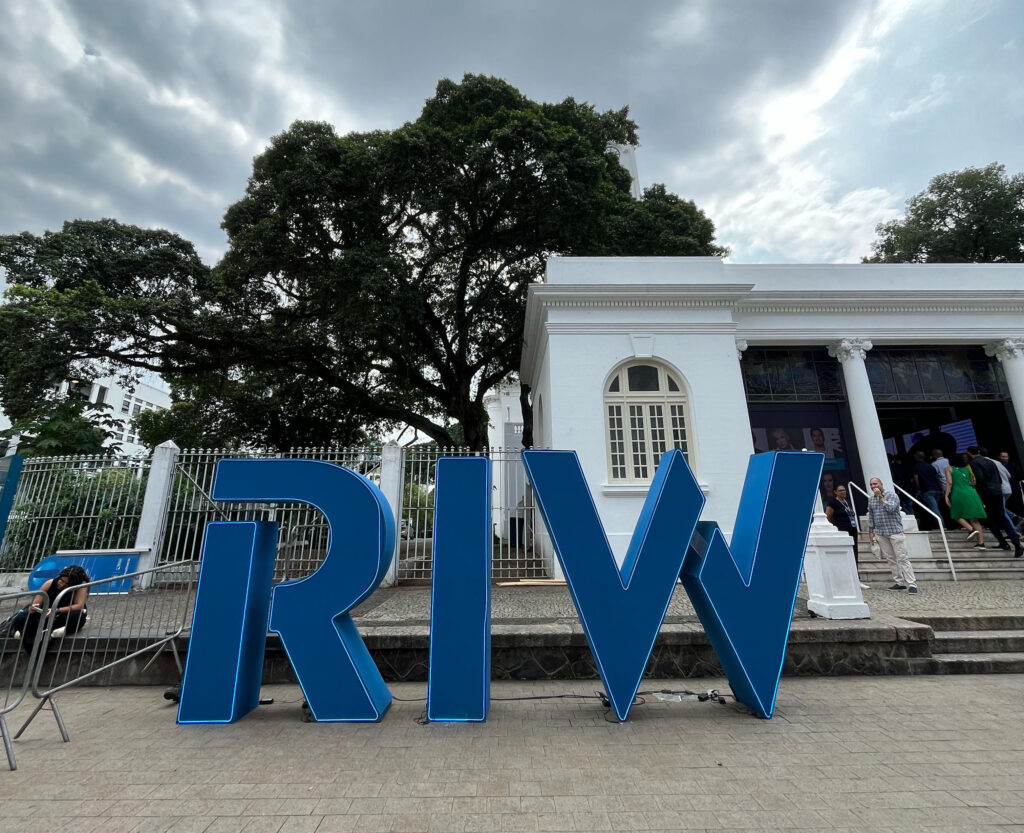
The Olympic Boulevard area, in Rio de Janeiro’s Port Zone, experienced a busy week in early October with the third edition of Rio Innovation Week. Over four days, tens of thousands of people walked through the former cargo warehouses at Pier Mauá, a place that, thanks to the Rio 2016 Olympic Games, has been revitalized and established itself as one of the city’s best venues for large-scale events. Although improvements are still needed in logistics and organization, particularly when it comes to visitor access.
Attendees had to brave intense heat and soaring heat indexes while deciding which of the 1,700 talks on the program to attend. There was an overwhelming feeling that everything was happening at once and that something interesting was inevitably being missed. Everything revolved around identifying future trends and exploring where we are heading in the struggle to make the planet a more sustainable and equitable place to live. All of this took place along the shores of Guanabara Bay, with beautiful views of its waters, the Rio-Niterói Bridge, and the Museum of Tomorrow.
Celebrities and the Sustainability Debate
Drawn by names such as Anitta, Luciano Huck, and Xuxa, crowds packed together in an attempt to enter the most popular sessions. With dozens of panels taking place simultaneously, it wasn’t easy for attendees to choose and put together their ideal schedule of talks. But with a little planning and luck, it was possible to discover interesting topics and learn about how innovation can drive progress in every aspect of our lives.
Anitta’s presence, in fact, turned out to be a stroke of luck for those who went to see Ailton Krenak, the first Indigenous representative to be elected to the Brazilian Academy of Letters. The internationally renowned pop star and the Indigenous leader spoke at the same time, on different panels held far apart from each other. This divided the audience’s attention. Those who chose Krenak were fortunate: besides escaping the commotion caused by Anitta’s fans, they had the opportunity to hear his remarkably insightful ideas and opinions about our society.
The Indigenous leader, environmentalist, philosopher, poet, and Brazilian writer of the Krenak people spoke just one day before being elected to the Brazilian Academy of Letters. A fierce critic of humanity’s mistreatment of the environment, Krenak highlighted the ancestral knowledge of forest peoples as being capable of understanding time better than any technological invention. It was a bold decision by the organizers to include, at an event that celebrates technological advances, a voice that condemns many of those very advances.
“Sustainability is a corporate myth. When plastic was invented, it was sustainable. Until it started eating us,” Krenak said, drawing applause from parts of the audience. Even artificial intelligence, the great star of the new era, came under criticism. “Are we going to give up our dreams in favor of technology?” the Indigenous leader asked, referring to AI taking over tasks previously performed by human beings.
Lessons from the Favelas for the Corporate World
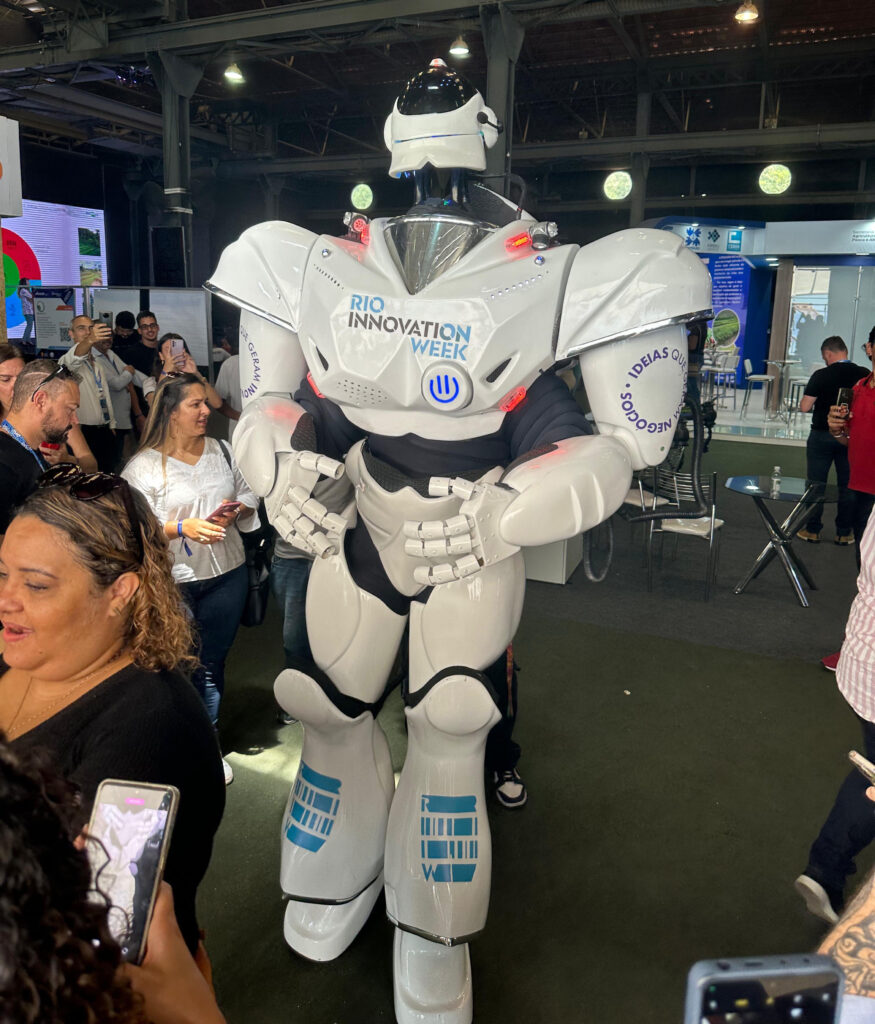
Those who managed to navigate around enormous humanoid robots, dodge giant drones, and make their way past the bodies of new electric cars eventually reached the warehouse halls where the panels were taking place.
The ESG agenda and diversity were recurring themes in many presentations, demonstrating their importance in the corporate world.
Several corporate executives discussed some of the challenges involved in creating a genuine diversity program within companies.
“To implement an ESG agenda, you don’t need an enormous action plan. But you do need to take the right steps,” said Tatiana Mafra of BW Energy.
Some speakers came from favelas to demonstrate the importance of investing in talent from underrepresented groups to help strengthen the social dimension within companies. “The periphery has cutting-edge technology and is bringing innovative solutions. Because we need to survive,” said Juliana Coutinho of Visão Coop.
One lesson that has become more than clear in the ESG world is the need to promote productive inclusion. People need to learn how to earn money rather than simply having meals handed to them. These lessons come from the favelas, where entrepreneurship is driven by necessity rather than vocation. In other words, anyone looking to invest in innovation needs to seek solutions that emerge from diversity.
A recurring idea among the speakers was that a successful diversity journey must be accompanied by inclusion. “There’s no point in simply increasing the number of Black people and women in companies without also implementing an effective program to make these individuals feel welcomed and that they belong in their workplace. This process needs to be carried out patiently, without rushing. For leaders, managing heterogeneous teams is more challenging, but it delivers better results in the long term,” said Suelen Marcolino, Head of Diversity and Inclusion at LinkedIn.
And because everyone deserves a little relaxation, two stages set up along the pier provided live music to close out each day of the event. Watching the sunset over Guanabara Bay, even as it continues to suffer from the effects of pollution, is a spectacle that only Rio can offer. Rio Innovation Week came to an end with a positive overall outcome. Perhaps the greatest takeaway is that the biggest innovation the city can achieve is becoming capable of attracting large-scale events. And to do so, it needs to know how to welcome visitors, especially through investment in public safety, infrastructure, and organization. Rio deserves this transformation.
Marcelo Moreira, Director of DiversaCom