

Quando vi que “permacrise” foi eleita a palavra de 2022 pelo dicionário europeu Collins, percebi o quanto as feridas de 2020 ainda não cicatrizaram com o final daquele ano inaugural da pandemia. Depois de permanecer num estado constante de atenção, o que fica é mais do que uma exaustão, mas aquilo que é consequência da situação de estar “no limite” por muito tempo. O que vem depois?
“Permacrisis is the feeling of living through a prolonged period of instability and insecurity.”
With the aim of restoring stability and security, the public debate in 2023 is likely to involve the following broad issues:
- Environmental protection and global warming
- Public finances and social investment (including hunger and the spending cap)
- Relations between branches of government and democracy (including relations with the press)
- Employability and new working relationships
- Tax reform and the country’s reindustrialization
- Diversity and inclusion
- Investment in healthcare, science, and research
- Investment in education and culture
- Public security and firearms
- International relations
But ultimately, what is at stake comes down to two things: 1. Economic activity and 2. Security and stability. If a company’s agenda connects with either of these two areas, its chances of being heard and making a difference in the discussion increase.
By “economic activity,” we mean investment, employability, labor relations, purchasing power, a reduction in the number of people in debt, and economic acceleration. Similarly, “security and stability” also encompass vaccination coverage, ending hunger, reducing violence rates, decreasing the number of young people who are neither studying nor working, improving education indicators, environmental protection initiatives, and so on.
Starting somewhere
The problems revealed by the pandemic – and not just those caused by Covid-19 – seem so large and complex that they can lead to paralysis, precisely because people do not know where to begin, as Textual CEO Carina Almeida pointed out.
Organizing these actions is the responsibility of authorities and companies that seek to become agents of change. Communication has the task of organizing the narrative around these actions to achieve the engagement needed to drive social, economic, and sustainable development.
New behaviors generate new demands, and we are connected to the needs and urgent priorities of the corporate environment, such as racial literacy, sustainability and diversity education; employee engagement; videos; empowering leaders through messaging decks; defining clear narratives; content that explains the reasons behind actions; and other relevant turning points.
With this in mind, we have organized the 10 trends for 2023 in which communication will play an active role.
1. Tech: we are no longer early adopters
The behaviors acquired during the pandemic have become part of our routines, and we have now moved beyond adapting to and using technology out of necessity toward a need driven by desire and preference. The metaverse, NFTs, blockchain, Web3, and smart cities are some of the terms that make up the mantra of what comes next in technology. But what really changes the game is what these technologies make possible and the behavioral changes embedded in adopting new processes. Want an example? We are increasingly drawn to subscription services rather than ownership. We no longer subscribe only to streaming content services, newspapers, newsletters, and influencer channels; we are now considering subscriptions for physical goods. We subscribe to cars.
The downturn among big tech companies and layoffs at startups also raise a warning that the tech business model may need to be revisited. On the other hand, these initiatives and innovation labs have enormous potential when integrated into large companies
2. More PR in HR
The new skills required for work in the post-pandemic world also made headlines in 2022. For the coming year, employee training will become a permanent fixture on corporate calendars, with companies embracing shared responsibility for the much-celebrated concept of lifelong learning.
Issues involving remote work, health, and well-being share space with the search for purpose in this area of life as well, reflecting the convergence of generations that tend to feel motivated and engaged by causes and services they believe in.
This engagement is precisely what has caught companies’ attention. Messages about purpose, ESG, diversity, and corporate values should not be limited to leadership (which is increasingly attentive to addressing key messages at every speaking opportunity), but should reach all employees. After all, employees are the ones who truly live, experience, and carry the company’s values beyond its walls, telling more people – including end customers at various touchpoints – about all the positive and purposeful initiatives we emphasize so much in our daily communication efforts.
The way companies engage employees is changing, and in this sense, PR is becoming one of HR’s major areas of innovation.
3. Purpose with intentionality
Having employees talk about a company’s values and programs should increasingly become something intentional rather than accidental. This effort to communicate the company’s purpose, objectives, programs, and concrete corporate goals to everyone should become more widespread through training and awareness-building initiatives, providing employees with the arguments they need to deliberately increase visibility.
This topic also raises another issue for companies: education and awareness. Not everyone knows what a carbon footprint is or is familiar with specific terminology related to diversity and racial literacy. For everyone to understand the value of these initiatives, it becomes necessary to get everyone on the same page so that we can move forward together on this agenda.
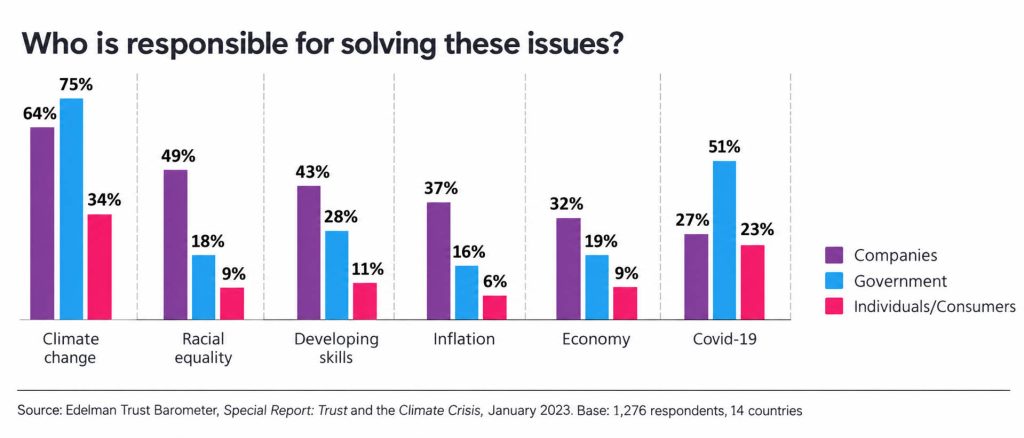
According to Deloitte, 66% of employees at high-growth brands see purpose as a guide for decision-making. And when it comes to end consumers, local purchasing decisions are based on global thinking. According to Mintel’s Global Consumer Trends 2023 report, for example, 62% of Brazilians believe that if they act now, there is still time to save the planet. In this scenario, brands that demonstrate commitment gain an increasingly strong competitive advantage.
4. ESG First
Companies’ level of commitment to ESG has been influencing purchasing decisions. According to the EY Future Consumer Index, Brazilians are prioritizing environmental issues, including factors such as recycling, renewable energy, the circular economy, reducing carbon impact, animal cruelty, zero waste, and reforestation. ESG is more than a national mantra; it is a global priority.
The press has been giving visibility to investments in areas that reinforce the importance of ESG values, and media outlets themselves are creating dedicated editorial coverage of the subject.
5. Diversity matters
Within ESG, we have the “S,” for social, which deserves special attention. The discussion is maturing, and companies are increasingly being asked to provide data on internal representation and proactive measures to improve their diversity figures.
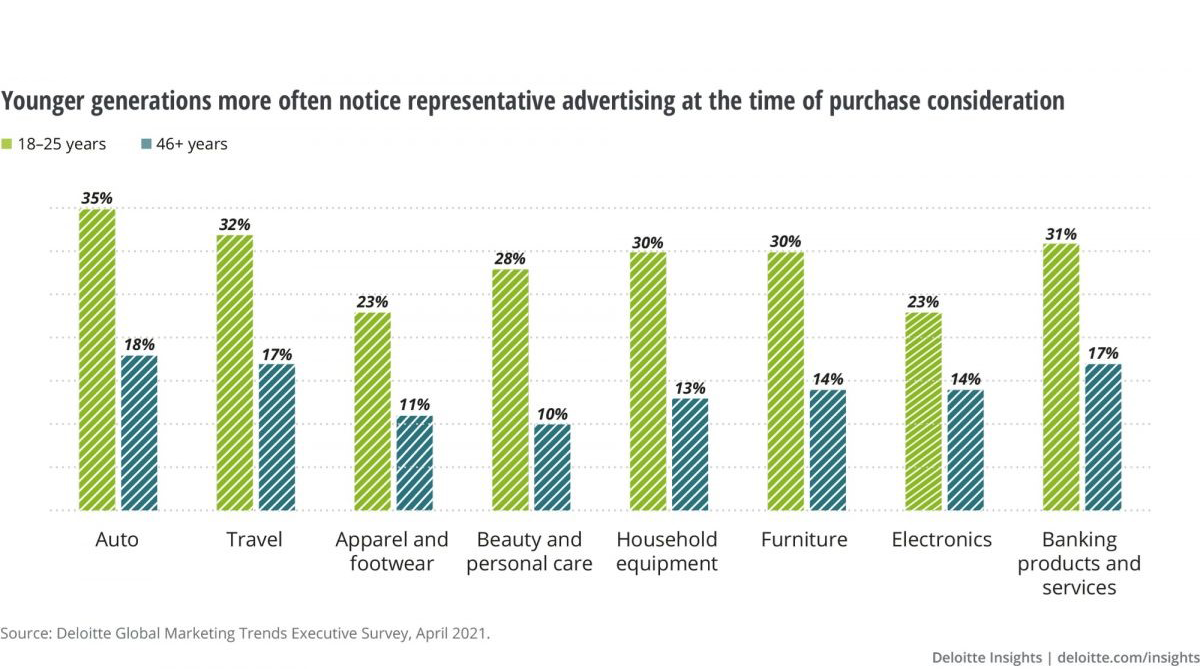
Campaigns and media outreach lists should also increasingly take diverse audiences into account. According to Deloitte, young people aged 18 to 25 are more likely to consider inclusive advertising when making purchasing decisions, reinforcing a generational trend.
6. Data awareness
Transparency legislation has once again come into focus, and we have developed a greater understanding of the right to access public data. We have become accustomed to the existence of Brazil’s General Data Protection Law (LGPD), and today, as a society, we better understand the need to give consent and ensure compliance with the intended use of our data. The end of cookies has been postponed until 2024, but just as we are no longer early adopters in technology, the discussion about personal data is now moving to another level: facial recognition, artificial intelligence, and algorithmic racism.
Addressing complex and structural issues involving technology and society will require communication that goes beyond technical terminology and offers more in-depth analysis of the consequences of biased system configurations. Corporate decisions related to these issues will require special attention from leadership, as well as well-established narratives and arguments that consider the technical points of conflict influencing interpretation, behavior, and action.
7. The press: transparency and credibility
Following this data-driven movement, the press itself is going further by providing access to raw data and/or reference documents showing the origins of the information supporting news reports. It is no longer enough to be transparent; media outlets must demonstrate transparency to regain the trust of audiences who, in recent years, have become lost amid a flood of information from countless sources: from neighbors, social media, and WhatsApp to opinionated commentators and influencers with no commitment to impartiality. After all, WhatsApp is not a source; it is a medium. And fake news is an industry. Ultimately, this means reminding people of the differences and processes involved in professional journalism – a pillar of democracy.
Journalism labs and independent media outlets have been investing in diversifying news formats as another way of aligning with audience expectations.
Media outlets will also increasingly consider how to turn their internal resources into products. Not merely as news editors, but as executives of content and communications companies, offering products that provide solutions beyond traditional journalism, drawing on the talent of their teams and what they do best (a trend identified in the 2022–2023 Innovation in News Media World Report).
8. A new era for social media
In 2023, we may move toward a new pattern of social media use. Many variables contributed to the disruption seen in 2022. Some of them include: new dimensions of crises generated by fake news and regulatory factors, Meta’s declining revenue, Twitter’s new phase under Elon Musk, community marketing instead of personas, TikTok overtaking Google as a search engine for younger generations, and video dominating communication. In fact, the short-form video trend, focused on spreading narratives across multiple channels, is strongly influenced by TikTok and the algorithms that determine content distribution on these platforms.
Within this social media environment, influencers have become more selective about how and with whom they work. This is not just a matter of revenue, but also reflects the fact that they themselves have become brands and understand how to create valuable content for their own niches. Over the past year, influencers have become more involved in companies’ content production, often establishing permanent connections through professional relationships such as executive or consulting positions.
Conversations in this environment are becoming increasingly “humanized,” using language that feels closer to consumers. Snackable content, which is simpler and more direct, has been helping increase the number of touchpoints throughout the consumer journey and maximize revenue by telling multiple, varied stories to each community.
9. More voice products, more communication and narratives designed for voice
We are not just talking about podcasts, but also smart speakers, how we interact with them, the Internet of Things (IoT), smart homes, and streaming games. Voice User Interface (VUI) marketing is gradually emerging to influence how companies communicate and how content is produced for interactions between users and machines, as confirmed by WGSN’s Future Consumer research for 2023. After all, what is your company’s voice? What is the gender of your company’s response voice through Alexa? How do users ask questions about the company? What answers do I need to provide? This will not be a sudden change, but it is next in line. Preparation for the multitude of devices emerging from the long-awaited Internet of Things era needs to begin now. Have you already transformed your communications into audio?
10. Phygital: the convenience of the hybrid journey
The channel doesn’t matter; the relationship is with the brand. Want an example? It doesn’t matter whether you’re reading Estadão in print or online: you trust the brand regardless of the format.
Executives are investing in this type of hybrid experience to keep consumers connected. According to Deloitte research, the main reasons include personalization (43%), innovation (43%), customer connection (40%), and inclusion (38%). In an omnichannel environment, one channel complements another throughout the customer journey, including providing rich experiences that make physical stores even more attractive.
In this sense, we will increasingly see “delivery of everything,” and when we talk about online business, we will be going far beyond e-commerce. S-commerce is already an emerging trend. According to the Consumer Pulse Survey by KPMG US, TikTok is already the leading source of social media advertising influence for Millennials (75%) and Generation Z (64%) in the United States. In addition, between 50% and 60% of consumers make purchases sometimes, frequently, or always based on advertising recommendations or recommendations on social networks.
And t-commerce is beginning to take a clearer shape in terms of how it will work. Televisions are ready to develop addressable advertising capabilities and expand their reach. Here, we are talking about native streaming apps and traditional broadcasters that have expanded the ways they deliver content and even leverage their talent rosters to distribute messages across different channels.
Both also enable D2C (direct-to-consumer) live commerce and the strengthening of owned media. And how could we overlook the fact that events will become increasingly hybrid, even when they are exclusive?
These were the trends for 2023 that you should not overlook in your communications planning. It is not just about commemorative dates or a calendar of opportunities for an action plan, but about understanding behaviors to define strategies, the “how,” and the “why.”
Lina Garrido