

Another indicator that reinforces what we all feel and know: the world has definitely become more unpredictable.
This is confirmed by the Institute for Crisis Management (ICM), which annually tracks and classifies all crises that become public and are reported in English around the world, both in the press and on social media. In other words, crises with global reach.
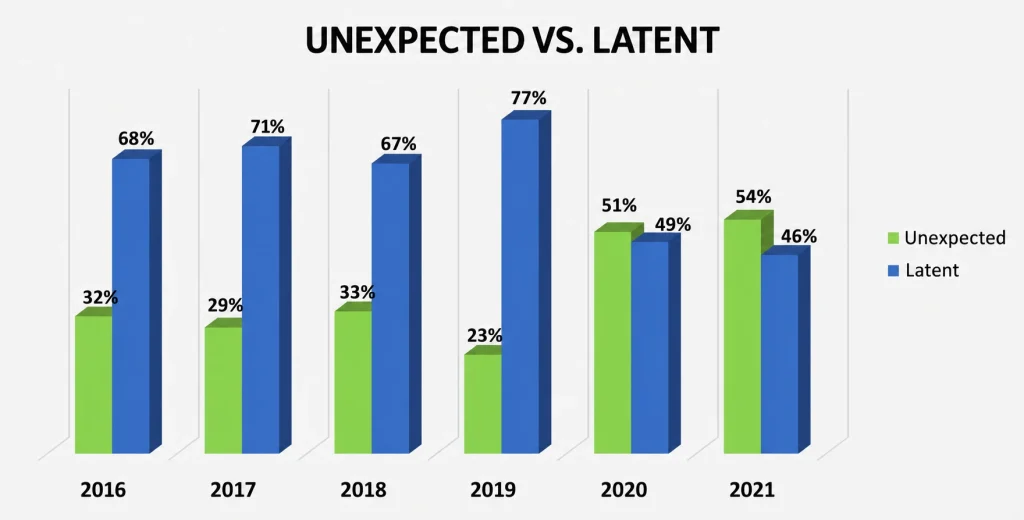
The first major change revealed in the latest report, released this year, concerns the origins of crises, classified as sudden or smoldering. Before the pandemic, in 2019, smoldering crises accounted for 77% of all incidents (compared with 23% for sudden crises). In the previous three years, the picture was quite similar, with smoldering crises ranging from 68% to 71%. This allows us to conclude just how often organizations, brands, and celebrities miss opportunities to resolve or reduce known risks that have a high potential to negatively affect their activities and reputation. Prevention!
In this year’s report, which covers 2021, however, the situation was reversed: sudden crises accounted for 54% of incidents, compared with 45% for smoldering crises. Why? Covid-19 and its effects? Of course, but not exclusively.
Gone are the days when product and service quality and safety failures were the main sources of crises – most of them known, or smoldering. Product recalls now appear at the bottom of the list… Since 2019, cases of sexual harassment and discrimination have begun climbing the rankings, driven by successive incidents that have attracted enormous visibility and mobilization worldwide. And these factors will undoubtedly continue to trigger major crises in organizations that fail to confront these issues directly and adopt clear commitments translated into effective policies, programs, and training.
And what about 2021? At the top of the ICM ranking released this year, catastrophes appeared for the first time, accounting for an astonishing 36% of all global crises recorded worldwide. In addition to the damaging effects of the pandemic, they are closely related to major disasters caused by climate change – from hurricanes to cyclones, from extreme cold to large-scale fires and wildfires. The ICM emphasized that “according to Climate Connections, our planet experienced staggering climate disasters totaling more than $47 billion in 2021.”
Controllable events? No. Unpredictable? Some of them, yes. But working to reduce their causes is “the fight of our lives,” as UN Secretary-General António Guterres stressed on this second day of COP27 in Egypt, warning: “We are on a highway to climate hell with our foot still on the accelerator.”
And where does communication fit into all this?
It is interesting to note that, alongside the central debate on emissions reduction targets and the issue of “loss and damage,” the discussion about the role of communication in engaging society as a whole on climate issues and empowering individuals to contribute more concretely to combating the effects of global warming is gaining ground.
We clearly experienced this during the Covid-19 pandemic, when scientists and doctors dominated the news and social media, many of them demonstrating a surprising ability to communicate clearly and practically. They became new influencers, powerful agents of influence in engaging the population in properly combating the virus and supporting vaccination campaigns. They ended up playing a fundamental role in the “battle of narratives,” preventing denialist discourse from spreading even further.
Similarly, campaigns developed by companies, institutions, and NGOs were vital in engaging their ecosystems in the various areas of cooperation needed to overcome the pandemic that brought the world to a standstill.
This parallel between communication during Covid-19 and communication about climate issues is also highlighted as a warning in a recent article in The Washington Post, which was discussed in an edition of the Brazilian publication The Brief last week. The American newspaper’s article addresses the need to learn from the successes and, above all, the mistakes made in combating the pandemic in order to adopt a new and more effective approach to communicating about climate change.
Experts interviewed say that people’s general perception is that the problem is so enormous that they simply do not know where to begin. “People need to know more about what they can do to generate positive impacts rather than feel guilty,” said Baruch Fischhoff, a professor at Carnegie Mellon University.
“Even the people most alarmed by the issue do not know what they can do, individually or collectively,” emphasized Anthony Leiserowitz, founder of the Yale Program on Climate Change Communication in the United States. “And if they do not organize to demand political action, it becomes much easier for (climate) denialism to gain ground,” Leiserowitz concluded in another interview, with Folha de S.Paulo.
In other words, there is an enormous gap between people’s level of concern and their level of engagement. And the path to narrowing that gap necessarily involves communication.
Carina Almeida, CEO of Textual